


Smart home technology has redefined comfort and efficiency for homeowners, but window automation often remains a source of hesitation. Concerns frequently revolve around complexity, long-term reliability, and overall value.
The good news is that modern smart shade products have matured. Solutions now exist that seamlessly blend easy installation with reliable, everyday performance, provided you choose the right approach for your home.
This in-depth guide breaks down the distinct types of smart shade solutions available today, helps you distinguish between "features" (like battery power) and "hardware," and clarifies which options are simple retrofits versus full-scale renovations.
What Defines "Easy Installation" in Smart Shade Products?
A product is genuinely simple to install when it avoids the need for structural or electrical modifications. For a DIY approach, true easy installation means:
-
No electrical rewiring or running new cables behind drywall.
-
No wall cutting or drilling beyond standard bracket mounting.
-
No requirement for a certified professional installer.
-
Clear, step-by-step calibration via a mobile app.
-
An installation time of under 15 minutes per window.
Types of Smart Shade Products Available
It is common to see terms like "Battery-Powered" or "DIY" listed as product categories, but these are actually just features. (After all, almost any shade can have a battery).
To truly understand your options, you need to look at the hardware architecture: are you keeping your existing blinds (Retrofit) or replacing them entirely (Built-In)?
1. Retrofit SmartShade Controllers (Chain & Cord)
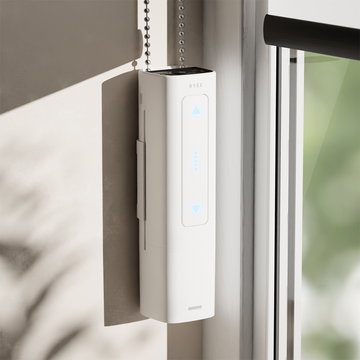
Concept: These devices are the most practical entry point for most homeowners. They mount to the window frame and loop your existing beaded chain or continuous cord through a motorized gear, physically pulling the chain for you.
-
Installation: Incredibly fast (5–10 minutes) using peel-and-stick or simple screw-in brackets.
-
Best For: Existing rolling shades (vinyl, fabric) or roman shades that use a beaded chain loop.
-
Market Leaders: The RYSE SmartShade is the standout in this category, designed specifically to lift heavier vinyl shades with high torque and reliable software.
2. Built-in Shade Motors (Tubular Motors)
Concept: Here, the motor is inserted inside the metal roller tube of the shade. While sleek, this usually requires buying new shades entirely, though some DIY kits allow you to insert a motor into an existing tube if you are handy.
-
Installation: Moderate difficulty. Requires mounting new brackets and leveling shades.
-
Best For: New builds or homeowners replacing old, worn-out shades.
-
Market Leaders: Eve MotionBlinds offers excellent retrofit kits for existing tubes, while Rollease Acmeda provides the motors used by many custom shade fabricators.
3. Retrofit Smart Curtain Openers
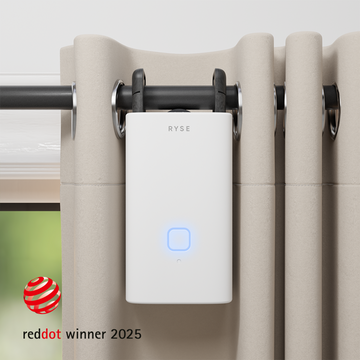
Concept: Often called "curtain drivers," these small devices tuck behind your existing curtain and run along the rod or rail, pushing the fabric open or closed.
-
Installation: Extremely fast; usually clamps onto the rail in seconds.
-
Best For: Existing curtains on rods or U-rails where you want to keep your current fabric.
-
Market Leaders: The SwitchBot Curtain 3 is a popular choice for rod-based drapes.
4. Built-in Motorized Curtain Tracks
Concept: This is a full hardware replacement where the entire curtain rod is swapped for a motorized track. A belt drive inside the track moves the carriers silently.
-
Installation: Complex. Requires drilling, precise track sizing, and often professional assembly.
-
Best For: Luxury renovations, heavy custom drapery, or very wide windows (over 10ft).
-
Market Leaders: Somfy Glydea Ultra is the industry standard for high-end motorized drapery.
5. Retrofit Wand Tilt Control
Concept: Designed for horizontal blinds (venetian blinds) with a twist wand. The device replaces or attaches to the wand to twist it, tilting the slats open or closed. Note: These devices generally do not lift the blind up or down; they only tilt slats for light control.
-
Installation: Very simple attachment to the headrail or wand hook.
-
Best For: Wood or faux-wood blinds with slats.
-
Market Leaders: The SwitchBot Blind Tilt and Sunsa Wand are current options, with the RYSE SmartBlind arriving soon to bring robust lifting capabilities to this category.
6. Built-In Motorized Blinds (Full Systems)
Concept: A complete, factory-assembled smart window covering. The motor, power source, and fabric are integrated into a single high-end product.
-
Installation: Professional installation is highly recommended (and often required for warranty).
-
Best For: High-budget projects where aesthetics and custom fabrics are the priority.
-
Market Leaders: Hunter Douglas PowerView Gen 3 and Lutron Serena are the premium choices for whole-home integrated systems.
Installation vs. Reliability Comparison
|
Product Type |
Installation Effort |
Approx. Cost |
Best Application |
Example Product |
|
Retrofit SmartShades (Chain) |
Very Low (DIY) |
$$ |
Existing Roller Shades |
RYSE SmartShade |
|
Built-in Shade Motors |
Medium (DIY) |
$$$ |
New Roller Shades |
Eve MotionBlinds |
|
Retrofit Curtain Openers |
Very Low (DIY) |
$ |
Existing Drapes |
SwitchBot Curtain 3 |
|
Built-in Curtain Tracks |
High (Pro) |
$$$$ |
Heavy/Custom Drapes |
Somfy Glydea Ultra |
|
Retrofit Wand Tilt |
Very Low (DIY) |
$$ |
Slat Blinds (Tilt Only) |
Sunsa / SwitchBot |
|
Full Motorized Systems |
High (Pro) |
$$$$$ |
Whole Home Renovation |
Hunter Douglas |
What Makes Smart Shade Performance Reliable?
Reliability is measured by real-world operational metrics, not just marketing language. A truly reliable smart shade system delivers stable performance over time and ensures operational simplicity.
Key reliability factors include:
-
Physical Torque: Can the motor lift the weight of your shade consistently without stalling? Retrofit chain motors like RYSE are geared specifically to handle heavier vinyl shades that lighter battery wands might struggle with.
-
Connectivity Protocol: Does the device stay connected? Devices using Thread or Zigbee tend to offer more stability and range than older Bluetooth-only models.
-
Manual Override: Can you still use the shade if the internet goes down? Retrofit solutions generally allow on-device control buttons, whereas some built-in motors can leave you stuck without a remote.
Reliable performance also extends to control systems, which should include:
-
App-based scheduling (e.g., sunrise/sunset automation).
-
Voice control integration (Google Assistant, Alexa, Siri).
-
Group control (closing all bedroom shades at once with a single command).
Conclusion and Recommendations
Yes, smart shade products exist that successfully balance easy installation with reliable performance. The key to success is distinguishing between features and product architecture.
Recommendations for Selection:
-
For Renters & Easy Upgrades: Prioritize Retrofit SmartShades (like RYSE) or Retrofit Curtain Openers. They offer the easiest installation, require no drilling, and can be taken with you when you move.
-
For Slat Blinds: If you only need light control, look for Retrofit Wand Tilt devices.
-
For New Builds: If you are buying new windows or doing a full renovation, consider Full Motorized Systems like Hunter Douglas, provided the budget allows.
By matching the specific product type to your current window situation, you avoid the frustration of complex installs and ensure a reliable, automated home experience.


